- news
- conference held: “supporting access to affordable and high-quality professional home care for later life”
Conference Held: “Supporting Access to Affordable and High-Quality Professional Home Care for Later life”

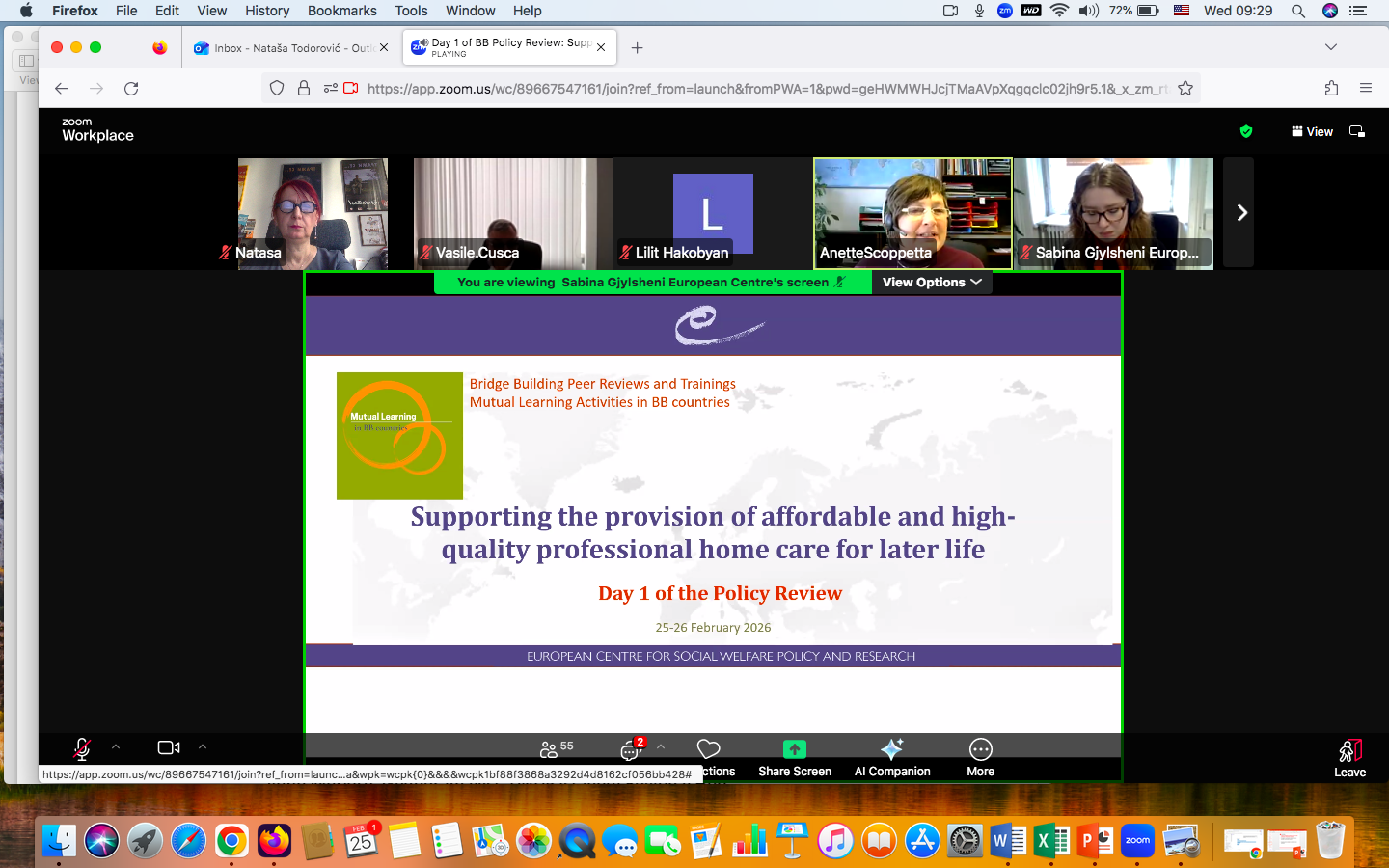
As part of the Bridge Building initiative (BB), an online public policy review titled “Supporting Access to Affordable and High-Quality Professional Home Care for Later life” was held on February 25, 2026.
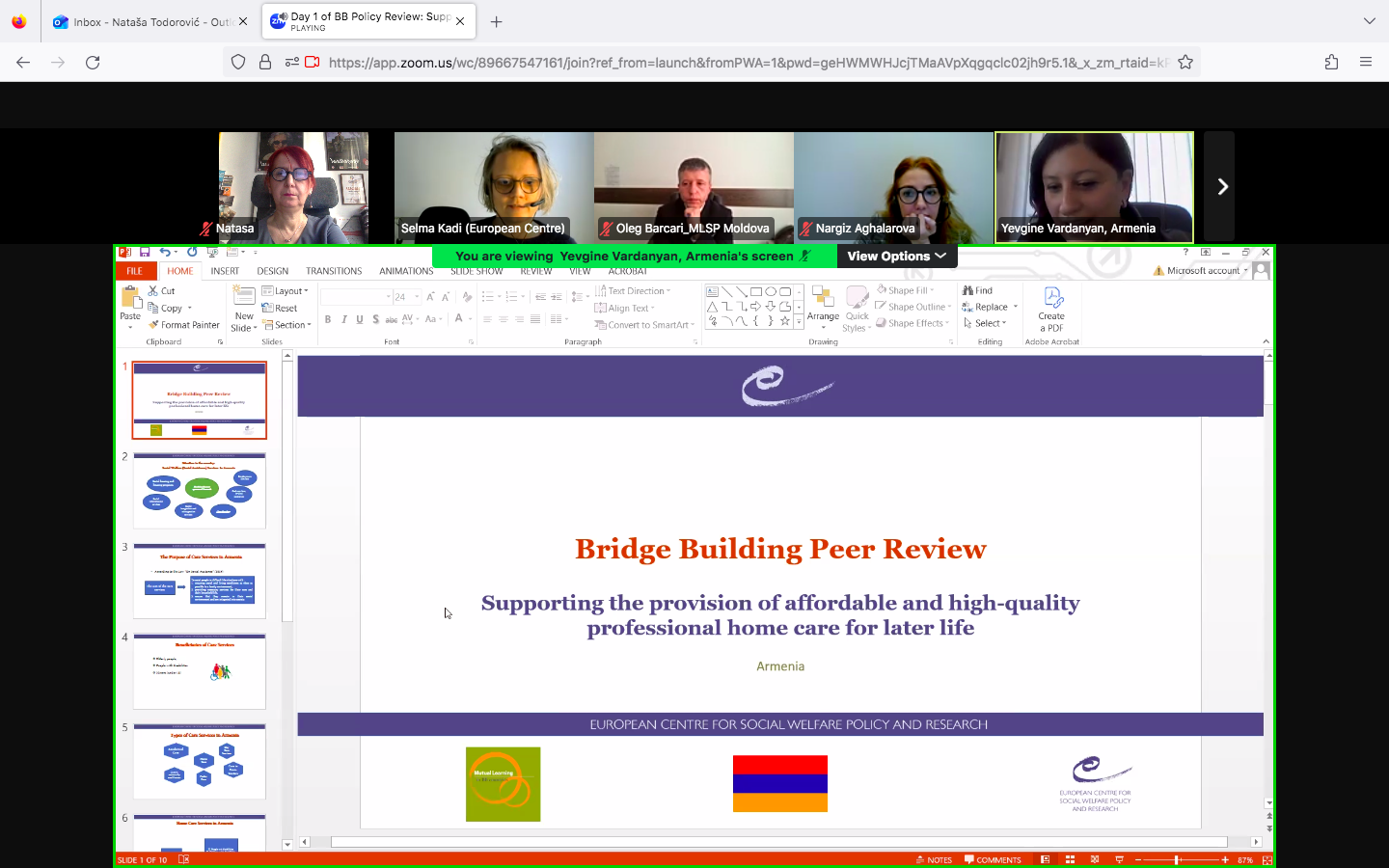
The event was organized by the European Centre for Social Welfare Policy and Research in Vienna, with the participation of representatives from ministries, relevant institutions, and other key stakeholders from Western Balkan and Eastern European countries.
The meeting brought together over 50 representatives from ministries, competent institutions, and other relevant actors from the region, with the aim of exchanging experiences and improving policies in the field of professional home care for older people in home settings.
Key Themes and Objectives
The meeting focused on:
- Accessibility and quality of professional home care,
- Financing models and affordability of services,
- Eligibility criteria for accessing rights,
- Integration of health and social services,
- Cooperation with families and support for informal caregivers,
- Innovative and digital solutions in service provision.
The goal was to identify systemic challenges as well as promising practices that could contribute to the development of sustainable, integrated, and user-centered long-term care systems.
Challenges in the Western Balkan Region
During the session dedicated to the Western Balkans, Nataša Todorović, psychologist at the Red Cross of Serbia, presented an analysis entitled “Professional Home Care in the Western Balkans: Accessibility, Financing, and Promising Practices.”
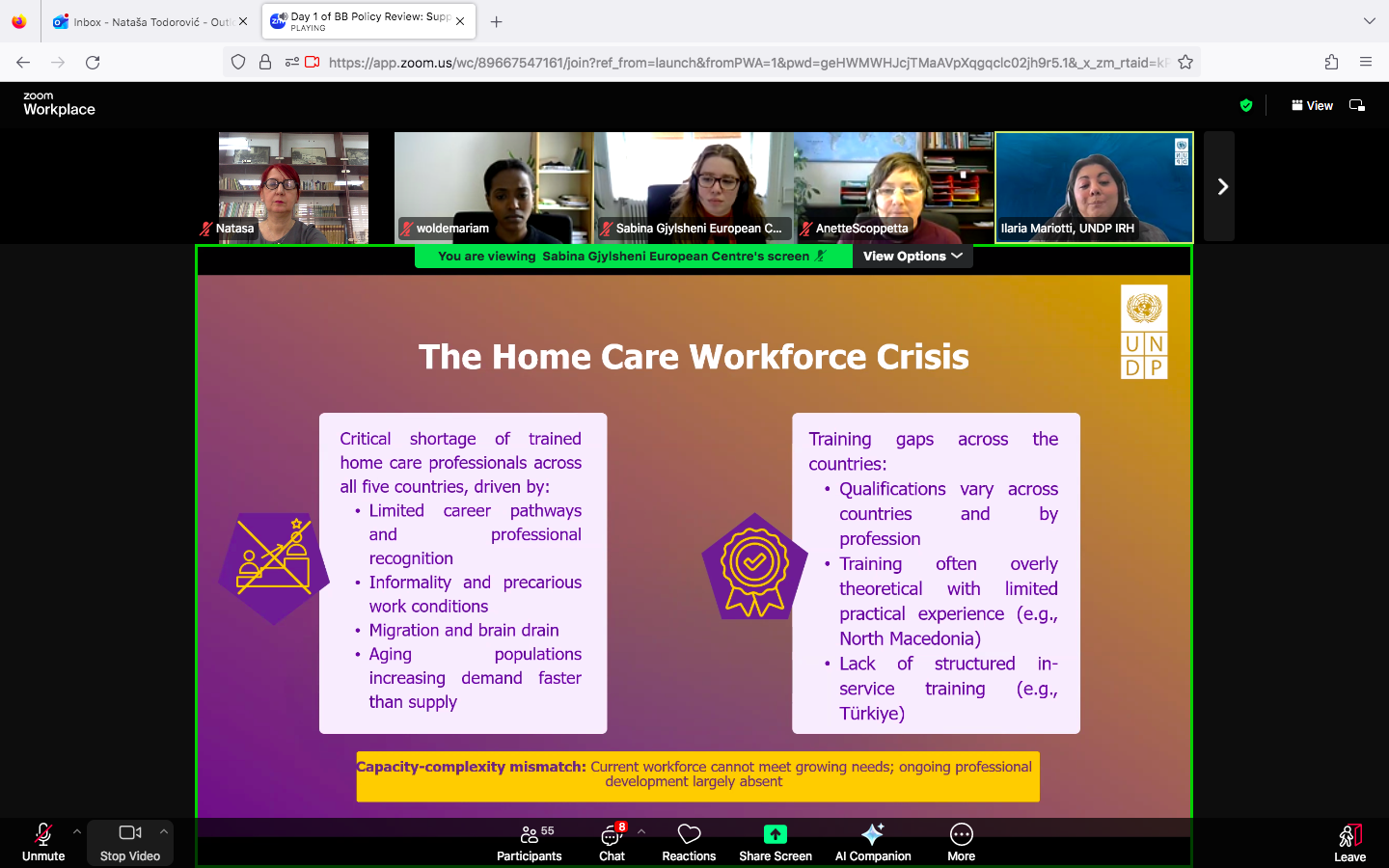
Several key challenges were highlighted:
- Rapid population ageing and increasing long-term care needs,
- High percentage of older people with significant functional limitations,
- Very limited coverage of formal home care services,
- Pronounced fragmentation between health care, social care, and pension/disability insurance systems.
It was emphasized that most long-term care in the region still relies on families due to insufficient capacity and uneven availability of formal services.
It was concluded that further progress requires strengthening public financing of home care, developing qualified staff, improving coordination between systems, and systematically integrating successful pilot models into regular publicly funded services.
The public policy review confirmed that developing accessible, high-quality, and integrated professional home care is one of the key priorities in responding to demographic changes and the growing needs of the older population in the region.